One of the most important issues I have been struggling with recently is the question of commentary within the artwork. Take a conceptual work and leave out the comments. What do you get? What is a life of a concept without a conceptual framework? Behind the rhetorical question lies a complicated issue. First, it's with the relation between the esthetic experience and the contextual, often intellectual approach. Then, going more specifically toward a commentary that is included in the work itself, we have questions of self-reference and self-presentation, and things get messy. Several issues: isn't it a sort of self-publicity, or rather, a self-justification, which serves as an excuse for any "misreadings", that is, readings different from the one intended? Of course, an artist's text (also in the case of an artist's statement) can get quite smart and distanced, so as not to get too involved. People like Cattelan or Matthew Barney are masters at that. But sometimes the work lives off the description. It seems to only make sense through the concept - and not because the concept
is the work, but because either a) the work seems an excuse for the concept, or b) the concept guides us through the work like a map. It's the second case I'm interested in. Take
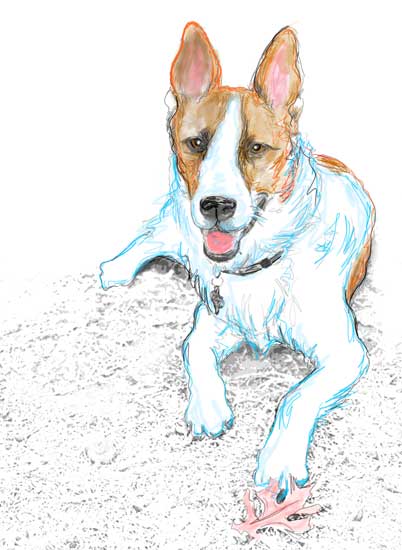
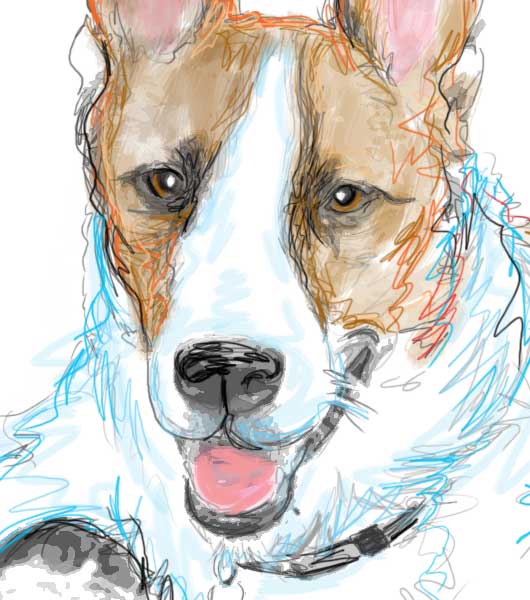
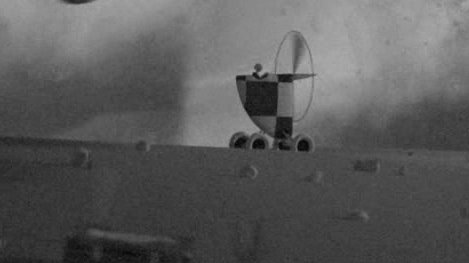
Book, a formally simple work developed by four artists, two of them in the U.S., two in Belfast. Look at book. It is an artist's sketchbook exchanged every week for 36 weeks, creating a sort of an artistic dialogue between the two sides. The conversation of images, so common these days, might tell us little (especially given the small size of the images, which doesn't allow a more patient analysis). But everything changes dramatically when we receive
guidance (I recommend the audio version, which is very pleasant and, well, human). Things become clear, make sense, and... sometimes appear as
obvious (!).
Yes, an
auto-guided work. Isn't it something problematic? Do we need a guide?
What's the problem with a guide? Well, for one, he makes it difficult to drive by ourselves. He also intervenes in the very aesthetic experience we're having, and can easily spoil it. In the case of Book, we can turn the comment off. But it's not that easy (like turning the TV off for someone I know). And then, there are works which impose this guidance. Sometimes it's a subtle comment by the author, other times, the curator makes his ideas all-too-clear, but at times it's simply there, put so clearly within the image, the film, the play, we can't miss it. Does it always make the work poorer? Because we're not driving? Can't someone else drive?